
- By 1859, approximately 1,300 handmade cigar factories were operating in Havana; by 1905, the United States had over 70,000 registered cigar manufacturers, and then three forces dismantled it all in thirty years.
- A single cigar rolled in Tampa in 1895 concealed the message that started the Cuban War of Independence, smuggled across the Straits of Florida with a revolutionary's fate tucked inside its wrapper.
- Castro's 1959 revolution forced Cuba's greatest cigar families into exile, but they took everything with them, seed, technique, and knowledge, and rebuilt the premium cigar world across the Dominican Republic, Honduras, Nicaragua, and the United States.
When Jaime Partagás opened his factory on Industria Street in 1845, nobody could have predicted what the next hundred and forty years would look like. What followed was the full arc of human ambition played out in tobacco leaves, a golden age, a revolution, a collapse, an exile, and a rebuilding that created the modern cigar world as we know it. Governments tried to own it. Wars tried to destroy it. Machines tried to replace it. And through all of it, the people who rolled cigars by hand kept going. That stubbornness is what the premium cigar is made of.
Havana at its height
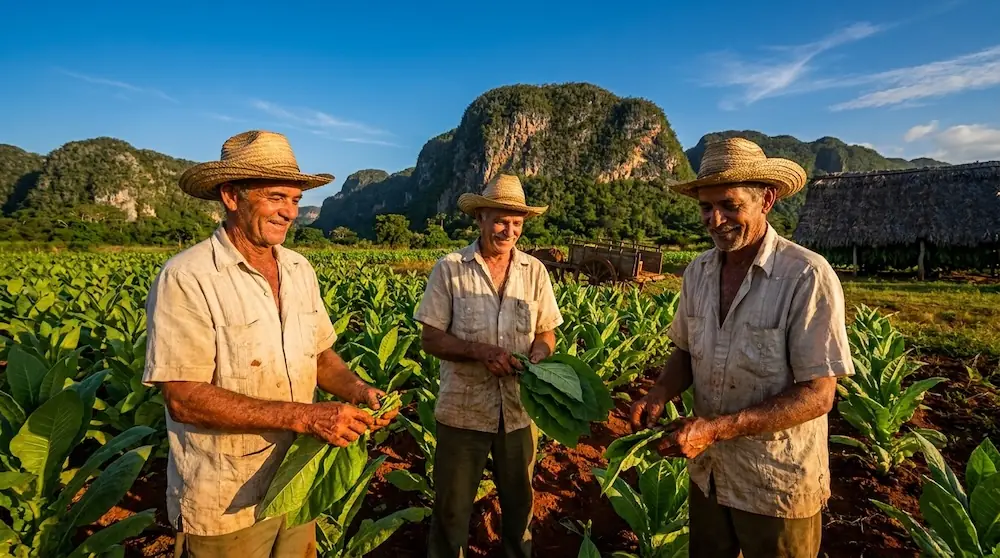
By 1859, deregulation had transformed Cuba completely. Tobacco production had doubled since the royal decree of 1817. Approximately 1,300 handmade cigar factories were operating in and around Havana, not scattered quietly across the island, but concentrated, competing, and pushing each other toward a standard of craftsmanship that the world had never seen in a mass-produced product. The names coming out of those factories were not just brands. They were institutions.
Partagás was already a legend, commanding the finest Vuelta Abajo leaf and pioneering the practice of having a reader, a lector, read aloud to the factory floor while workers rolled, keeping them educated and engaged during hours of repetitive work. Romeo y Julieta was established in 1875. H. Upmann had already opened its doors in 1844, founded by a German banker who loved Cuban cigars so much he started a factory to supply himself and his clients. Montecristo would follow. These were not small operations. They were cultural monuments in the form of tobacco.
In 1850, a Dutch merchant named Gustave Bock introduced something that would permanently change how cigars were sold. He began wrapping his cigars with a small paper band bearing his name, the first branded cigar band in recorded history. The practice caught on fast. For cigar makers who wanted their product identified in the box, the band became essential. Within a decade, lithographic printing had made those bands into small works of art, and the golden era of cigar labels and box art was fully underway. Some of the most ornate printed images produced in the nineteenth century appeared on cigar boxes. Collectors still chase them today.
The cigar that started a war
By the 1890s, Cuba's cigar industry was the most sophisticated in the world, and the island's people were running out of patience with Spanish colonial rule. José Martí, Cuba's great poet and revolutionary leader, had been organizing resistance from exile in the United States, building a network of support among the Cuban diaspora communities spread across New York, Key West, and Tampa. He understood that the cigar workers of Tampa, thousands of Cuban immigrants who had carried their skills across the Straits of Florida, were not just laborers. They were a political force.
On January 29, 1895, at a residence in New York City, Martí's secretary Gonzalo de Quesada worked with local revolutionary leaders on how to smuggle a critical message into Cuba, the order to begin the armed uprising. The decision, suggested by Fernando Figueredo, was to hide it in a cigar.
Late one night, a small group met at the O'Halloran Cigar Factory on Howard Avenue and Union Street in West Tampa. A skilled roller named Blas O'Halloran rolled five identical panetelas, thin, elegant cigars, all visually identical, all impeccably made. The one concealing the tightly rolled message was distinguishable only by two tiny yellow specks worked into the tobacco wrapper. The five cigars went into Quesada's pocket, and he sailed to Key West. There, a man named Miguel Angel Duque de Estrada took them and boarded a ship for Cuba on the moonlit night of February 21, 1895. Three days later, on February 24, the rebel war cry of "Viva Cuba Libre!" echoed across the island and the Cuban War of Independence had begun. A cigar rolled in Tampa started a war. The Cubans called that smoke the Cigar of Liberty, and they were not wrong.
Martí himself was killed in battle that same year on May 19, 1895, at the Battle of Dos Rios, just months after the uprising he had spent his life organizing finally began.
Ybor City: the cigar capital of the world
The story of how Tampa became the cigar capital of the world starts with a single decision made in 1885 by a Spanish immigrant named Vicente Martinez Ybor. He had been running a cigar factory in Cuba and then in Key West, and he was looking for somewhere with cheap land, warm climate, and access to a port close enough to Cuba to receive fresh tobacco. Tampa, at the time, was little more than a swampy outpost. Ybor saw potential where others saw mosquitoes, and he moved his operation there, naming the district after himself.
The results were extraordinary. Within a decade, Ybor City had a population of 6,000 and was drawing workers from Cuba, Spain, Italy, Germany, Romania, and China. Cuban bread filled the streets in the morning. Flamenco drifted out of bars at night. Social clubs, cigar factories, and shotgun houses spread across the district in every direction. The factory owners, aware that keeping skilled rollers happy was worth more than saving money on housing, built modest but solid homes and provided them to employees as part of their compensation. Those houses kept families rooted in the neighborhood, trained their children in the trade, and created a labor force that was both skilled and loyal. Some of those original houses still stand in Ybor City today.
At its peak in the early 1900s, Ybor City had 200 cigar factories employing approximately 10,000 rollers, producing up to half a billion handmade cigars a year. The largest of those factories was El Reloj, the Clock Factory, named for the clock tower that dominated its facade. When it opened in 1910, it was the largest cigar factory in the world in terms of floor space, built to accommodate 1,000 cigar rollers capable of producing 250,000 cigars a day, or 60 million a year. It was, by any measure, an industrial marvel built entirely around the craftsmanship of human hands.
José Martí Park at 13th Street and 8th Avenue in Ybor City sits on land officially donated by Tampa to the Cuban government in 1956. Entering the park means stepping onto Cuban sovereign territory, one of the most unusual geopolitical footnotes in American real estate.
The three killers
The cigar's reach in the early twentieth century is difficult to fully appreciate from where we stand today. By 1905, the United States government had over 70,000 registered cigar manufacturers on its rolls. Seven out of every ten Americans who smoked, smoked cigars. The cigar was not a premium luxury in this era, it was the default. It was what people smoked the same way people today reach for a phone. The corner cigar store was as common as the corner coffee shop.
But numbers that large contain their own fragility. What goes up at that scale does not gently decline, it collapses. Three forces dismantled the American cigar industry over the course of roughly thirty years, and none of them could have been stopped individually, let alone together.
The first was the cigarette. The machine-made cigarette was cheaper, faster to smoke, easier to carry, and required no cutting, no ritual, and no patience. Soldiers returning from World War I had been issued cigarettes in their rations, and they came home addicted. By the early 1920s, cigarette consumption was rising sharply and cigar consumption was beginning its long retreat.
The second was the machine. In the 1920s, automated cigar-rolling machines arrived in American factories. For manufacturers trying to compete with the price of cigarettes, the machines were irresistible. A single machine could replace dozens of hand rollers. Across the country, skilled cigar workers were displaced by equipment that could produce volume but could not replicate the judgment, the feel, or the quality of a hand-rolled cigar. The factories that survived did so by embracing mass production. The ones that did not were gone within a decade.
The third was the Great Depression. When the financial system collapsed in 1929, luxuries were the first things to go. Even at five cents a cigar, the standard price for a decent smoke in the early 1930s, a man out of work had better uses for his money. Factory after factory closed. By the mid-1930s, Ybor City, which had been producing half a billion cigars a year at its peak in 1929, was already a shadow of what it had been.
The 70,000 American cigar manufacturers of 1905 were reduced to a fraction within three decades. The last original Tampa factory standing is El Reloj, home to J.C. Newman Cigar Company, founded in 1895 by Julius Caeser Newman, an Austria-Hungary immigrant who started rolling cigars in a family barn in Cleveland after his mother paid a local cigarmaker to teach him the trade. The company moved to Tampa in 1954 and is now in its fourth generation of family ownership, still rolling premium cigars by hand in a 115-year-old building. It is the oldest family-owned premium cigar manufacturer still operating in the United States.
January 1, 1959
On the first day of 1959, Fulgencio Batista fled Cuba and Fidel Castro's forces entered Havana. By the early 1960s, Castro had nationalized Cuba's entire tobacco industry. Every private farm, every factory, every brand, Partagás, H. Upmann, Romeo y Julieta, Montecristo, Punch, Bolívar, fell overnight under state control. The families who had built those names over generations were given no warning and no compensation. They were simply told that what they had created was no longer theirs.
The names tell the story of what was lost. The Cifuentes family, who had owned and operated Partagás for decades, went into exile, Ramón Cifuentes eventually partnering with General Cigar by 1968 to bring Cuban-seed tobacco and Cuban expertise to new soil. The Menéndez family, who had owned H. Upmann and the Montecristo brand, left Cuba in 1959 with nothing but their knowledge and their connections. Benjamin Menéndez would go on to become one of the most respected figures in the Dominican Republic's growing cigar industry. The García, Toraño, and Palacio families followed similar paths, out of Cuba, into exile, and eventually into the fields of Honduras, Nicaragua, the Dominican Republic, the Canary Islands, and Miami.
What the revolution intended to nationalize, it actually scattered across the entire Caribbean and Central America. Cuban seed tobacco left with the exiled families. Cuban fermentation methods left with them. Cuban rolling technique, cultivated over two centuries, left with them, planting the seeds, literally, of what would become the modern premium cigar industry.
Castro understood what he had done to the industry better than he let on. In 1962, the United States imposed a trade embargo on Cuba. American cigar smokers were cut off from Havana cigars entirely. The premium cigar market in the United States, the largest in the world, was suddenly wide open, and the exiled Cuban families were perfectly positioned to fill it.
The cigar that Castro built
Sometime in the early 1960s, Castro was riding with one of his bodyguards when the guard offered him a cigar, a fuma he described as being made by a friend. Castro, a lifelong and devoted cigar smoker, lit it and immediately recognized that it was something exceptional. The friend was Eduardo Rivera Irizarri, a master roller working at the La Corona factory in downtown Havana who had been blending tobacco privately according to his own formula and rolling cigars for personal use. Castro asked for more. Then he asked for them exclusively. Rivera began making cigars at his home, then at La Corona, then, as Castro's security apparatus became involved, at a dedicated facility entirely his own.
In 1966, Castro established El Laguito factory in a former wealthy family's mansion in Havana's Miramar neighborhood. Rivera was made director. Castro's close associate Celia Sánchez suggested the name for the new brand, drawing on the Taino word that Christopher Columbus had first heard on a Caribbean shore nearly five centuries earlier: Cohiba. The brand was operated in total secrecy. The cigars were not sold. They were given, to diplomats, heads of state, and visiting dignitaries as gifts that carried the full weight of Cuban prestige. Former French President Charles de Gaulle had received some of the unbranded cigars as early as 1965. Che Guevara was among the first in Castro's inner circle to smoke them regularly.
In 1982, Cohiba went public. It was commercially released for the first time at the Ritz Hotel in Madrid, with great fanfare and immediate international demand. For markets outside the United States, which remained under embargo, Cohiba became the most sought-after cigar in the world almost instantly. Inside the United States, General Cigar, working with the exiled Cifuentes family, had already registered the Cohiba name in 1978 and would eventually build an American Cohiba brand made in the Dominican Republic from Cuban-seed tobacco. The legal battle over that name continues to this day.
What made Cohiba different from every other Cuban brand: an exclusive leaf source, Cohiba tobacco came exclusively from ten fields totaling 700 acres in Vuelta Abajo, reserved entirely for Cohiba production; a third fermentation, Cohiba leaf underwent a third fermentation in wooden barrels that no other Cuban brand received, producing unusual smoothness and depth; state secrecy, the brand operated in complete secrecy from 1966 to 1982, with cigars distributed only as diplomatic gifts to heads of state and dignitaries; and El Laguito, built in a former Miramar mansion, the factory was created specifically to produce Cohiba.
By 1982, the modern cigar world had taken the shape we recognize. The great Cuban names were split between Havana's state factories and the workshops of exile families in new countries. The premium cigar renaissance that would explode in the 1990s was still a decade away, but the foundation had been laid, in Tampa, in Havana, in Ybor City, in the Dominican Republic, and in the memory of families who had lost everything except the knowledge of how to grow, ferment, roll, and band the finest cigar in the world. The rest of that story belongs to Part 4.
From 1,300 Havana factories in 1859 to a dispersed exile industry by 1982, the cigar survived wars, machines, depression, and revolution. Every premium cigar you smoke today carries the DNA of families who refused to let it die.
Glossary
Frequently asked questions