
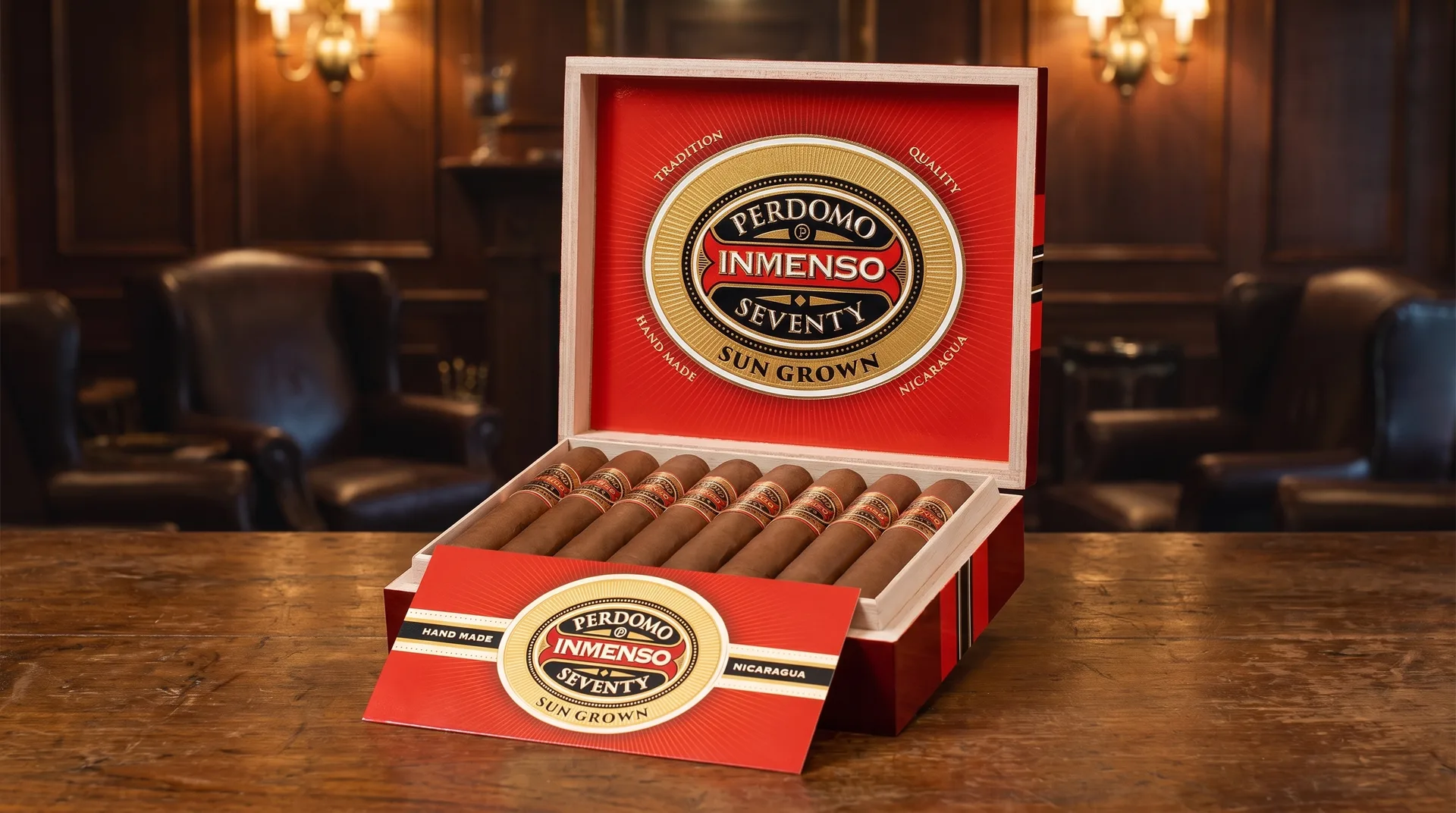
- Perdomo Inmenso Seventy Sun Grown Epicure, a 6×70 Nicaraguan puro with a Cuban-seed sun grown wrapper over Cuban-seed binder and filler, every leaf aged five years. Rolled at Tabacalera Perdomo in Estelí, Nicaragua, boxes of 16, roughly $8 to $11 a stick.
- Cedar, toast, and roasted nuts over leather, earth, and white pepper, with a creamy retrohale and a smoky barbecue sweetness that shows up late. Medium to medium-plus, flavor first, never a bruiser.
- BLC Rating: 88/100. Two-plus hours of cool, forgiving smoke for about $10. Bring a wide-gauge cutter and a free afternoon, this is not a lunch-break cigar.
Twenty years ago a seventy ring gauge cigar was a novelty, the kind of thing a shop kept near the register for a laugh. Perdomo rolled one anyway, shelved it, and waited. In 2021 the company brought the size back with tobacco aged five years, and a market that once giggled at fat cigars now buys them as a serious format. This is the cigar that got to say it told you so.
From the Porch
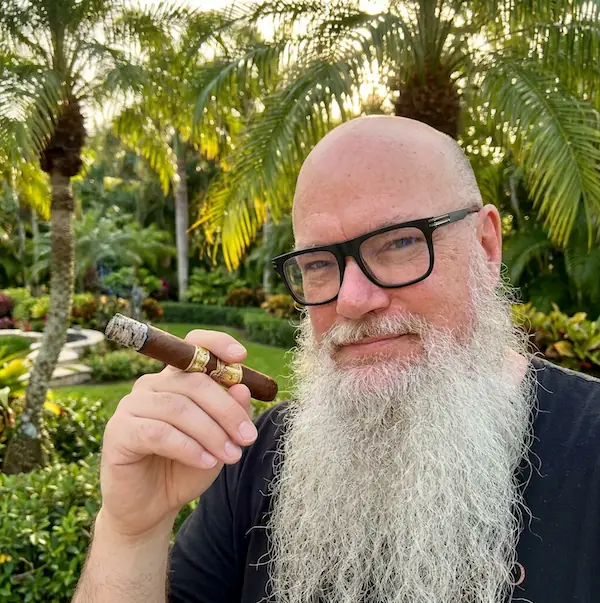
I first tried this cigar almost a year ago, at a Collective Mind Society event in Tampa, Florida. A 70 ring gauge was new territory for me, I like a big cigar but that felt like smoking a fence post.
A few draws in, I got used to the size in my mouth, and after that everything was fine. The Scar Lounge had a case on special that week, I grabbed one, and it sat in my humidor for months.
I finally brought it out for a porch session with Dallas. He gave me that look, the one that says I dare you, so I took the dare.
Cedar and toast up front, that cool heavy smoke rolling for over two hours, Dallas sitting there the whole time like he was supervising. I have smoked plenty of 70 ring gauge cigars since, and I still reach for them, Dallas approved.
My notes are below.
Behind the Blend
Nick Perdomo, Jr. is the third generation of a family that runs straight through Havana’s great factories, his grandfather Silvio worked at H. Upmann and Partagas and later spent years as a political prisoner, his father rose through those same factory floors before escaping Cuba. Nick Jr. took a different runway: a U.S. Navy air traffic controller who started rolling cigars out of his Miami garage in August 1992 and kept his day job at Miami International while the company found its feet.
Today Tabacalera Perdomo covers more than 88,000 square feet in Estelí, Nicaragua, with its own farms, its own box factory, and over 2,000 employees. The Inmenso Seventy is his personal callback, Perdomo rolled 70-ring cigars in the early 2000s when the industry treated the size as a stunt, and he revived it in 2021 once the market finally caught up.
BLC Blend Breakdown
The Vitola Lineup
| Vitola | Size | MSRP |
|---|---|---|
| Robusto | 5 × 70 | $6.25 (2021 launch) |
| Epicure← reviewed | 6 × 70 | $7.25 (2021 launch) |
| Churchill | 7 × 70 | $8.25 (2021 launch) |
The Epicure listed at $7.25 when the line launched in 2021, and Perdomo says it set those prices lower than planned to give smokers a break coming out of the pandemic. Prices have climbed since. The math still works.
The Cold Draw
The wrapper is milk-chocolate brown with a fine grain and seams that stay flat around a barrel this wide, the promo photography tends to redden it, in person it reads tan-brown and even. The band is the loud part: engraved gold foil with a sunburst, a black oval, and a red INMENSO ribbon.
On a normal cigar that band would dominate. On this one it looks almost dainty.
You will want a wide-gauge cutter or a deep punch, a standard guillotine will not swallow the head. The pre-light aroma off the foot runs rich earth and cedar, and the cold draw is firmer than you expect from a cigar this fat, carrying oatmeal-cookie sweetness, leather, and white pepper.
Firm is fine here. A seventy that draws loose smokes hot, this one paces itself from the start.
BLC Cigar Profile
Appearance
Milk-chocolate sun grown with flat seams and a gold band that looks small on the barrel, handle the foot gently, the wrapper can lift there.
Burn
Slow and cool with enormous smoke, the line wanders now and then and takes the occasional touch-up without drama.
Draw
Firmer than the ring gauge implies off a wide cut, it opens within the first inch and never plugs.
Here is the shape of it: a woody, toasty, nutty cigar that moves in slow seasons instead of sharp turns. Cedar leads the opening, earth and salt take the middle, and the toast comes back darker at the end with a sweetness you do not see coming. It starts medium and finishes medium-plus. Nothing about it is loud, everything about it is patient, and patience is the whole point of a cigar this size.
The First Third
The opening is toast and leather with cedar moving in fast behind them, and within the first inch the cedar takes the lead and holds it. A roasted nuttiness fills in the middle of the profile, black pepper hums underneath, and the finish turns nutty with a faint buttermilk tang that sounds strange and works. The retrohale, blowing smoke out through the nose, is creamier than the draw, mostly leather over a sharp edge of earth. Smoke output is enormous from the first puff. It also forgives neglect. You can set this cigar down for five minutes and it will not go out or turn bitter. Big cigars usually demand attention. This one just keeps the seat warm until you come back.
The Second Third
The middle is the earthy stretch. Leather and damp earth ease the cedar off the top, a saltiness creeps in, and the pepper shifts from black to white, more tingle than heat. Small notes drift through the finish, minerals, lemon, peanut shells, the kind of details you only catch because the cigar gives you so much time to look for them. An hour in, the Epicure is barely half gone. Nobody rushes a seventy, the seventy decides.
The Final Third
The last stretch brings the cedar back on top, toastier and darker than the opening, with black and white pepper sharing the finish over damp earth. The surprise lives in the retrohale: a sweetness closer to barbecue sauce than sugar, smoky and rich, it shows up late and stays to the end. Strength settles at medium-plus, body a notch above, never full. Plan for two hours and change at a normal pace. A slow smoker can stretch this cigar well past three. It ends the way it began, unhurried.
Overall Rating
An 88 buys a lot here: five-year-old tobacco, real movement across the thirds, and construction that mostly keeps up with a difficult format. The draw runs firm, the burn wants an occasional touch-up, and the foot deserves gentle hands, those are the costs of rolling a cigar this size.
What you get back is two-plus hours of cool, layered, flavor-first smoke for $8 to $11. Big cigars are usually a dare.
This one is an argument, and it wins more rounds than it loses.
Who Grabs This Cigar
This is a cigar for time on your hands: the long porch afternoon, the slow cookout, the game you plan to watch from kickoff to the last kneel-down. It suits the smoker who wants flavor ahead of force, medium-plus tobacco that never turns on you. And if the big-ring trend always looked like a gimmick to you, this is the serious version of the idea, priced so the experiment barely stings. Skip it if you have less than two hours, if you love a trim little corona, or if you need full-strength power, this blend aims for smooth, not shock. Grab it if immense sounds like a feature instead of a warning. Some cigars fit into your afternoon. This one becomes it.
A seventy ring gauge is not a punchline anymore. This is the cigar that waited twenty years to prove it.
— Norm Farrar
Frequently Asked Questions