Nicaragua shipped 258.4 million premium cigars to the United States in 2025, out of 429.8 million from everywhere. That is six of every ten, and more than the rest of the world put together. In 2018 it was 172.7 million, and it was not.
Aganorsa offers one example of the country's tobacco-growing and cigar-making businesses. Owned by Cuban-born Eduardo Fernández, the operation grows leaf for other manufacturers and produces cigars of its own.
Figures flagged Company account come from Aganorsa Leaf itself and have not been independently verified. Everything else on this page is sourced to the Cigar Association of America or to trade reporting.
172.7 million in 2018. 258.4 million last year.
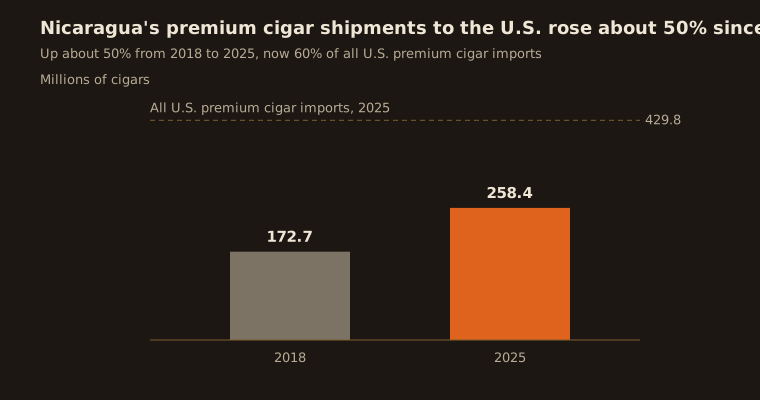
Volume is only half of it. Nicaragua accounted for about 48 percent of U.S. premium cigar imports in 2018, when the total was 362 million. By 2025 the total had risen to 429.8 million, up about 19 percent, and Nicaragua's share had reached 60 percent. The market grew. Nicaragua's slice of it grew faster.
The Dominican Republic has been Nicaragua's main rival for years. Last year it went the other way.
258.4M Nicaraguan premium cigars shipped to the U.S. in 2025
93.7M Dominican cigars, down 12 percent on the year before
The men who knew how to grow it had already retired
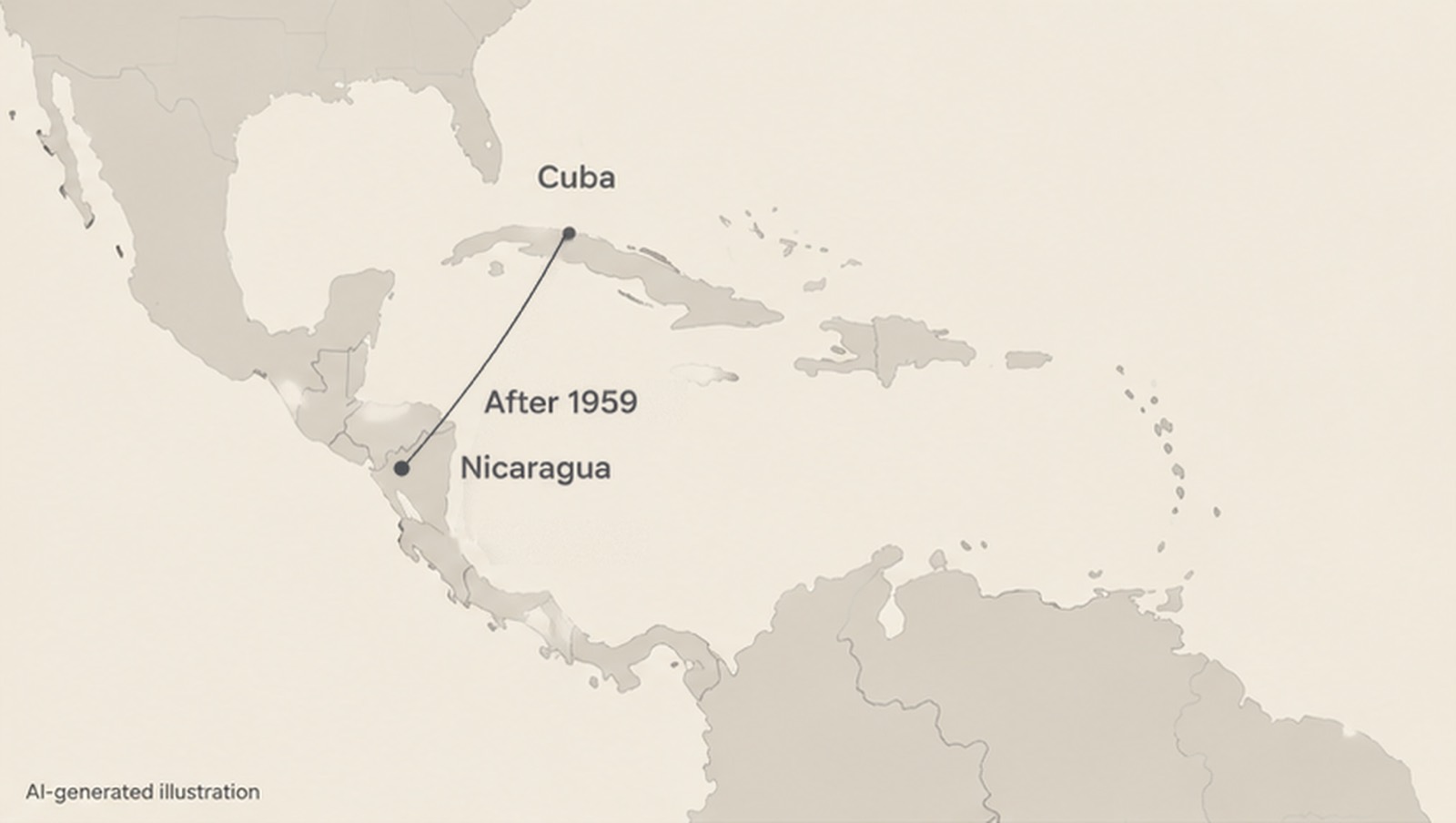
Nicaragua's cigar industry is young. Cuban exiles who left after the 1959 revolution started it, and it only took off once the country's civil war ended in the early 1990s.
Aganorsa is one thread in that story. The name stands for Agricola Ganadera Norteña S.A., the farming company behind the leaf. It sells to many other cigar makers, and it runs its own factory.
Company account Fernández had no farming background, so he recruited retired Cuban agronomists. Among them was Arsenio Ramos, whom the company describes as the former head of leaf processing in Pinar del Río. The company says Oliva was its first major leaf customer, and that it still grows Corojo 99, a lower-yield Cuban-seed variety many growers dropped.
In April 2018, Casa Fernández renamed itself Aganorsa Leaf, so the cigar business carried the same name as the Fernández family's Nicaraguan farming operation.
The corona is vanishing from American shops
American smokers keep moving toward thicker cigars. In Cigar Insider's 2025 retailer survey, 66.2 percent of participating shops named the toro or corona gorda their best-selling size. Coronas and lonsdales have become hard to find.
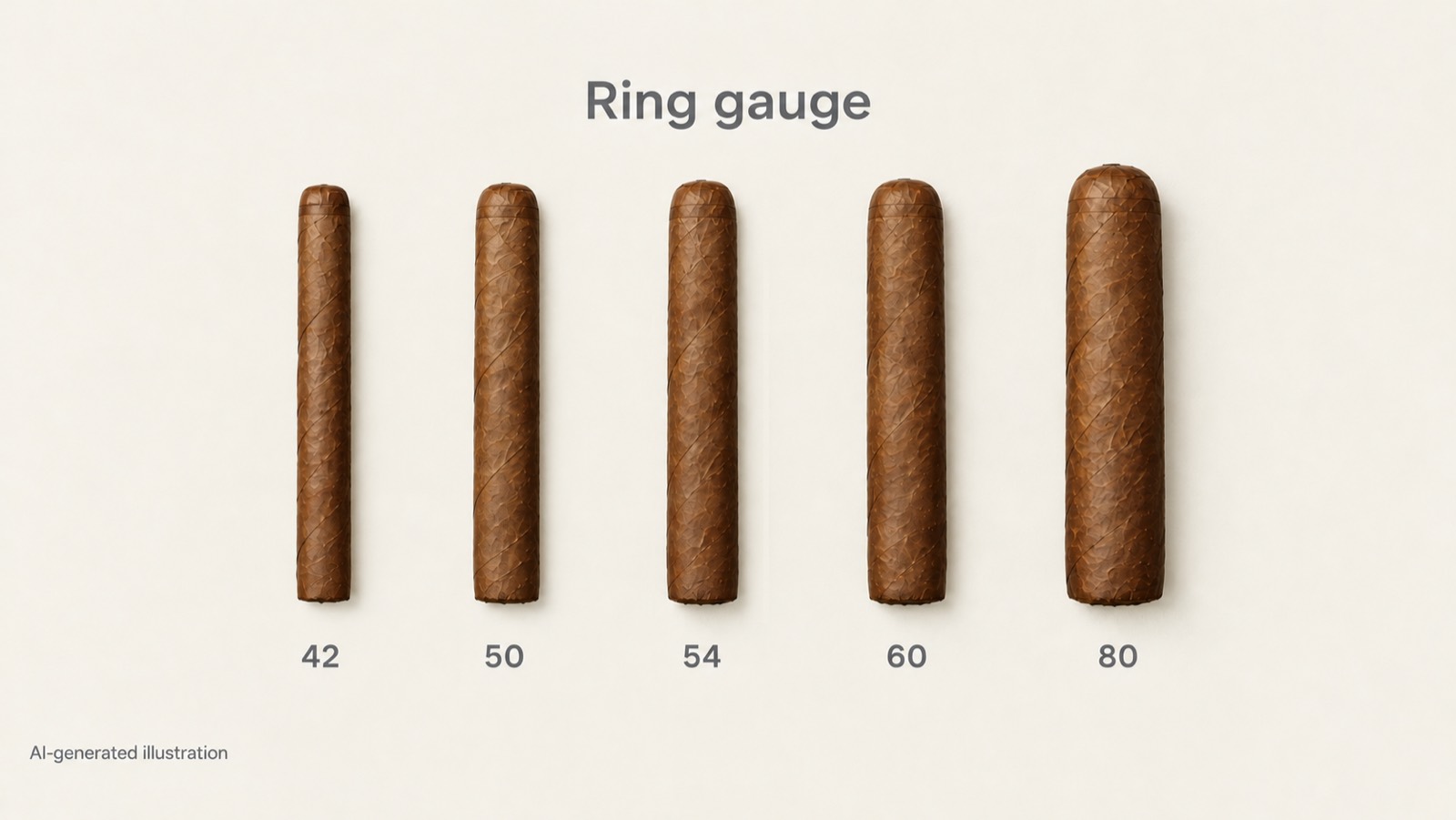
Casa Fernández helped set that trend rather than follow it. The company released the industry’s first 7x70 in 2011. In February 2015 it launched the JFR Lunatic Mambo, an 8x80 belicoso, eight inches long and 80 ring gauge, and the first 8x80 any major manufacturer had formally announced.
Company account Aganorsa says cigars of 60 ring gauge or more fill nearly all of its top ten sellers, and that long-haul truck drivers are one of its most loyal buyer groups, because one cigar can last a long stretch of highway. Both are the company's own account. No public sales figures exist to check the top ten against.
Nicaragua's cigar exporters have faced repeated U.S. tariff changes
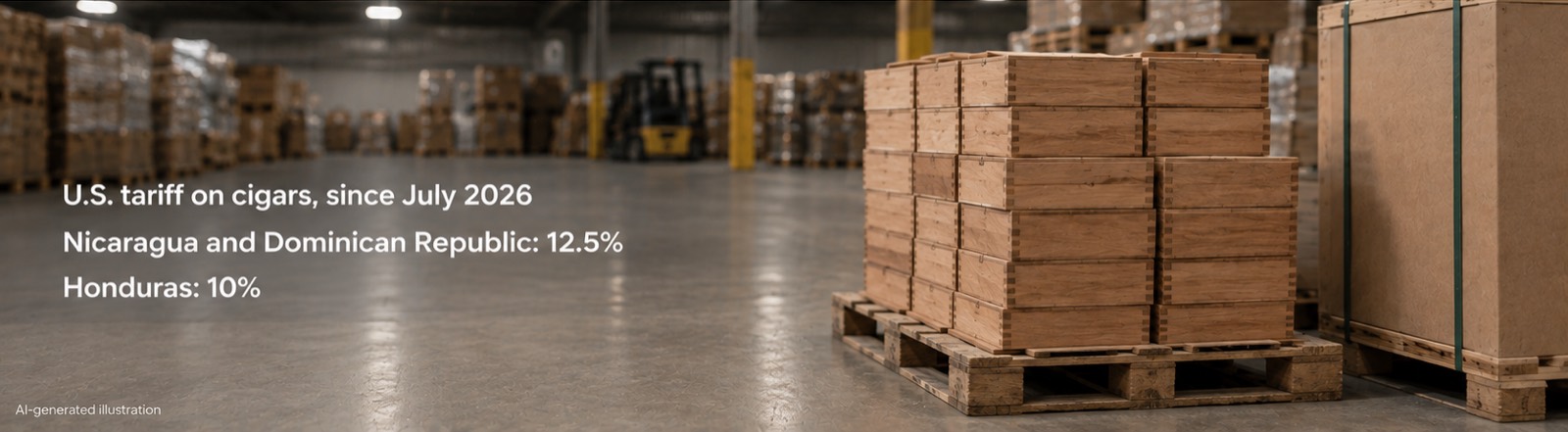
Since July 24, 2026, cigars from Nicaragua and the Dominican Republic have faced a 12.5 percent U.S. tariff, while Honduran cigars pay 10 percent. Nicaragua's rate has moved more than once since April 2025, from 19 percent down to 10 and back up again.
Nicaragua still dominates. It sent 56.8 million premium cigars to the U.S. in the first quarter of 2026, 62.5 percent of all shipments. Honduras was the only one of the three big producers to grow.
How these numbers were put together
Import figures are Cigar Association of America estimates of premium cigars within all large-cigar imports. The 2018 figure used here, 172.7 million, is the CAA's full-year number as reported in April 2019. An earlier figure of 140 million for 2018 circulated in news coverage at the time; it matches no CAA number and is not used here.